
Crop Health
Not a sample. Every plant.
Imaging robots walk the racks and measure every plant in the room — then tell you which ones do not look right.
Scouting is sampling. A grower walks the room, looks at what they can look at, and forms an impression. It works until the room gets big, and then the plant that was going to cost you a cycle is in the row nobody walked.
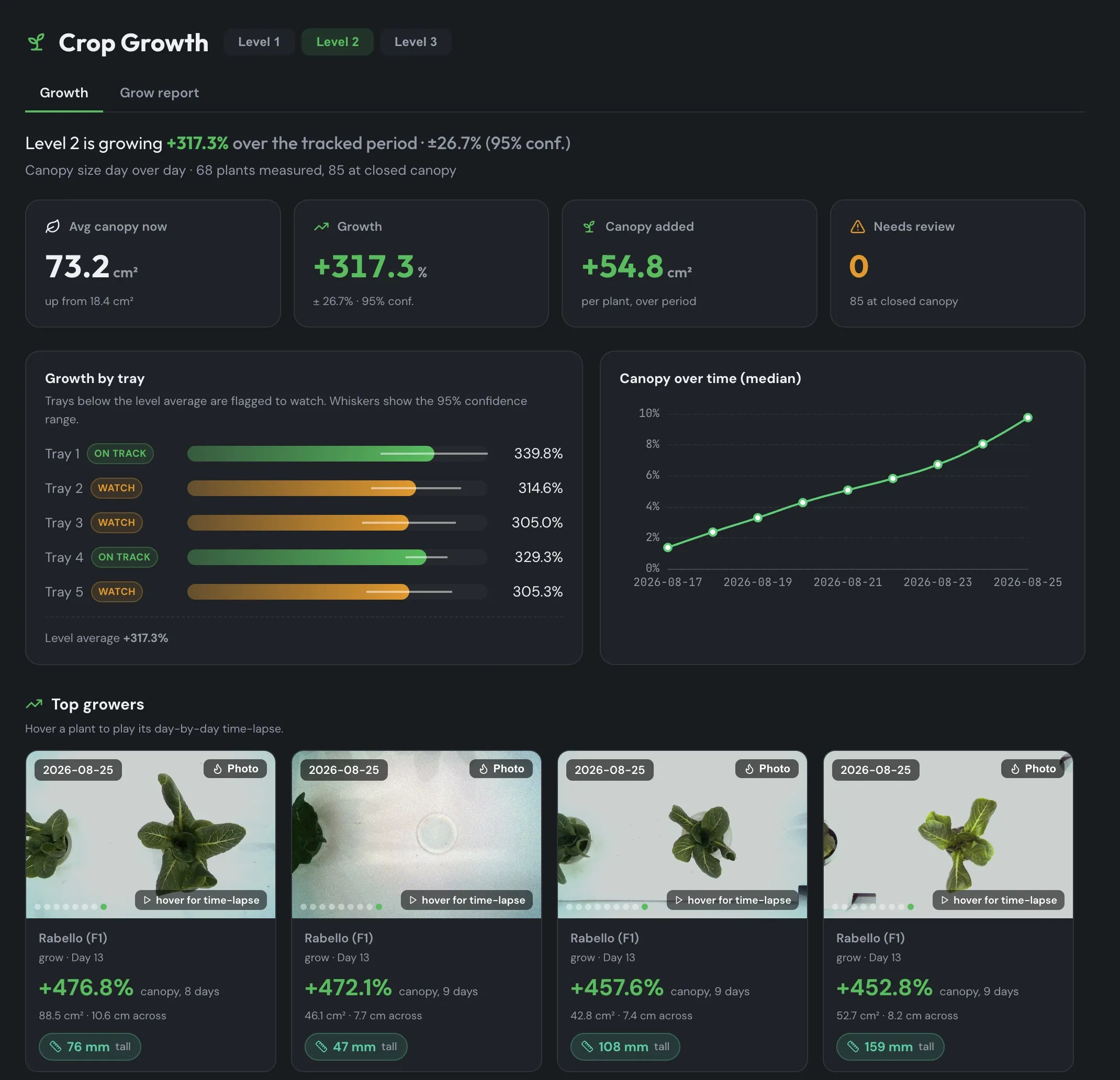
AGEYE's imaging robots photograph every plant on every rack. Each one is measured — canopy area, height, greenness, temperature — and compared against its own neighbors at the same stage. The plants that do not look like the rest are flagged for you automatically, plant by plant.
Canopy growth is tracked day over day, so you can scrub a time-lapse of any individual plant in the room and watch exactly when it started to diverge.
Questions
The things people actually ask.
Do I have to tag or register each plant?
No. Plants are identified by their physical position — rack, level, tray and position — which the imaging robot already knows because it is the thing doing the walking.
What happens once the canopy closes?
Once plants grow into their neighbors, a per-plant size number becomes unreliable, so the platform pauses the measurement and says so rather than quietly reporting a bad number. Imaging continues, so the time-lapse stays complete.
Does this need AGEYE hardware?
Per-plant imaging does — the coverage comes from the imaging robots walking the racks. The rest of the platform runs on any farm, with or without our hardware.
See Crop Health on a real farm.
We'll walk an order all the way through to its margin — on live farm data, not a slide.